 Skip-the-line available
 What to See at Tokyo Skytree: A Floor-by-Floor Guide
The glass floor at 350 metres, the 450-metre sky-walk and Sorakara Point, the landmark views, and the aquarium and shopping at the base.
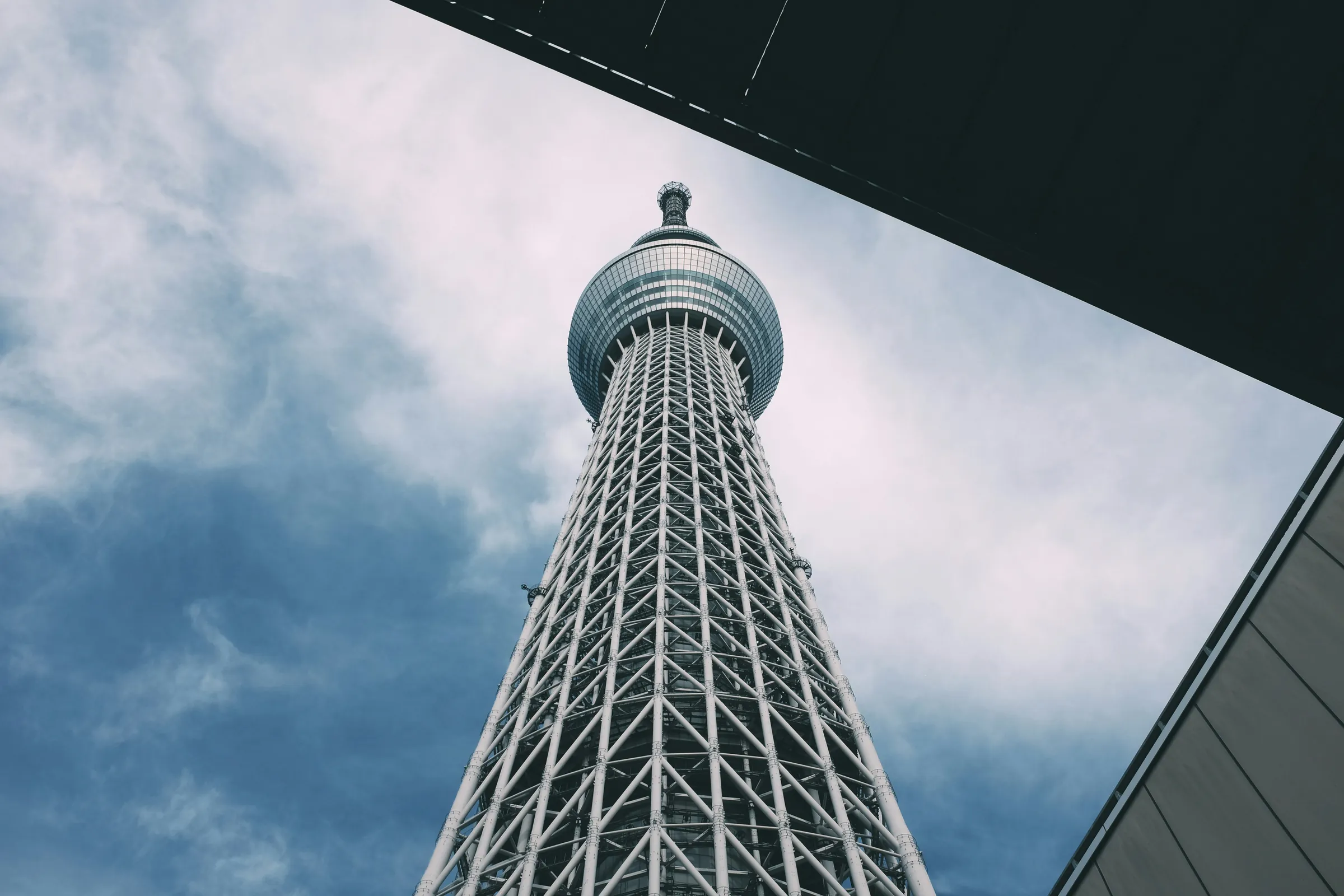
Tokyo Skytree is really two attractions stacked on top of each other, plus a sprawling complex at the base, and knowing what each level offers helps you decide how much of it to do. High-speed lifts carry you from the 4th-floor ticketing area up to the Tembo Deck at 350 metres — the main observation deck, with its famous glass floor and 360-degree panorama — and a combined ticket takes you higher still, up the spiralling glass sky-walk of the Tembo Galleria to 450 metres and the tower's highest accessible point at Sorakara Point. From either level the whole of Tokyo unrolls beneath you, with landmarks like Tokyo Tower, Senso-ji and, on a clear day, Mount Fuji picking themselves out of the grid. Down at ground level, Tokyo Solamachi wraps shops, restaurants, an aquarium and a planetarium around the foot of the tower, turning a quick trip up the lifts into a half-day out. This guide walks you through it level by level.
The Tembo Deck at 350 metres and the glass floor
The Tembo Deck, at 350 metres, is the main observation deck and the heart of any Skytree visit. It's a spacious triple-level gallery wrapping right around the tower behind floor-to-ceiling glass, so the panorama follows you in a continuous full 360 degrees as you walk the circuit — café space, a souvenir area and viewing telescopes are dotted around the three floors, and information panels help you identify what you're looking at. Up here you can pick out the layout of the whole city laid flat beneath you: the Sumida River curling below, the dense grid of central Tokyo studded with skyscraper clusters, the green of the imperial palace grounds, and on a clear day the distinctive snow-capped cone of Mount Fuji standing far away to the south-west.
The deck's signature feature is its section of glass floor, where a transparent panel set into the walkway lets you look straight down at the streets a dizzying 350 metres below your feet, with people and traffic reduced to specks. It's a genuine test of nerve and one of the most photographed spots in the entire tower — children, in particular, are utterly mesmerised by it, half-terrified and half-delighted. The Tembo Deck alone delivers what most people come to the Skytree for: the sweeping 360-degree views, the glass floor, and the simple thrill of standing higher than anything else for miles around. For many visitors, especially first-timers who are short on time or budget, this single level is the complete experience and there's no need to go any higher.
The Tembo Galleria sky-walk and Sorakara Point
From the Tembo Deck, a combined ticket lets you ride higher still to the Tembo Galleria at 450 metres — and it's a genuinely different kind of experience rather than just a taller version of the same view. The Galleria is a gently sloping, glass-walled tube that spirals upward around the outside of the tower, often described as a 'sky-walk', so rather than standing at a fixed window you walk a long, continuous ramp with the city falling away through the glass on one side and the structure of the tower on the other. It's noticeably more vertiginous than the main deck below, and it gives Tokyo from the highest publicly accessible viewpoint anywhere in the structure, a perspective that feels closer to flying than standing.
The walk climbs steadily to Sorakara Point, the tower's highest viewing spot at around 451 metres, a rounded space of glass and light designed to feel almost weightless, as if you were floating free above the city with nothing solid around you. Reaching it on foot up the spiralling ramp is a large part of the appeal — the gradual climb itself, with the view shifting as you rise, is the highlight for many visitors quite apart from the view waiting at the top. If you want the absolute summit of the Skytree experience and don't mind paying more for the extra 100 metres of height, the Galleria is well worth adding to your visit; if you mainly want the classic Tokyo panorama and the glass floor, the Tembo Deck already provides all of that on its own.
The views: Fuji, Tokyo Tower and Senso-ji
Part of what makes the Skytree's view special is how many of Tokyo's landmarks you can pick out from a single circuit of the deck. Look south-west on a clear day for Mount Fuji rising on the horizon, and toward the city centre for the orange lattice of Tokyo Tower, the older 333-metre broadcasting tower that the Skytree was built to succeed for the region's digital signals — catching both towers in one frame is a favourite shot among photographers. Closer in, the curved temple roofs of Senso-ji and the low, tightly packed old quarter of Asakusa sit just across the Sumida River, surprisingly intimate and detailed from this height, with the river boats threading between them. To the south you can trace the line of Tokyo Bay and the artificial islands of Odaiba.
The view changes character completely with the light, so the same ticket effectively buys two different sights depending on when you go. By day you can read the whole structure of the city spread out like a relief map — the rivers, the rail lines fanning out from the central hubs, the green rectangle of the imperial palace grounds and the blue line of distant mountains; by night it becomes an endless field of light stretching to the horizon in every direction, with rivers of moving traffic threading through it. Because the deck wraps a full circle, it's well worth doing a slow, unhurried lap to take in each aspect in turn: the bay and Odaiba to the south, the skyscraper clusters of central Tokyo and Shinjuku to the west, and the flatter residential sprawl reaching toward the mountains beyond to the north.
Solamachi, the Sumida Aquarium and the tower at night
At the foot of the tower, Tokyo Solamachi is a large shopping and dining complex with hundreds of shops and restaurants spread across multiple floors — a destination in its own right, and an easy, sheltered place to eat or browse before or after you go up the lifts. Tucked within the complex are two further attractions worth knowing about: the Sumida Aquarium, a sleek modern aquarium known for its large open penguin pool and its displays themed around Tokyo Bay and the islands to the south, and the Konica Minolta Planetarium 'Tenku', which projects immersive night-sky and themed shows in a darkened dome. Together they make the Skytree a comfortable half-day out rather than a quick stop, which is especially valuable for families with restless children, or on a day when low cloud has spoiled the long view from the decks.
Don't overlook the tower itself after dark, seen from the ground. Tokyo Skytree is lit each night in rotating illumination schemes — among them a cool, traditional sky-blue design known as 'Iki' and a regal purple one called 'Miyabi' — that change the tower's whole character against the night sky, drawing on classic Japanese aesthetics. It is a landmark of the city's nightscape every bit as much as it is a viewpoint above it, visible from across this part of Tokyo. Seeing the Skytree glowing from the riverside or the Sumida River Walk footbridge, and then riding up for the night view from inside, makes a deeply satisfying pairing — the tower as both the thing you stand and look at, and the place you stand inside and look out from.
Frequently asked
What is there to see at Tokyo Skytree?
The main draws are the Tembo Deck at 350 metres, with its glass floor and 360-degree views, and the higher Tembo Galleria sky-walk at 450 metres leading to Sorakara Point. At the base, Tokyo Solamachi has shops and restaurants plus the Sumida Aquarium and a planetarium.
Is there a glass floor at Tokyo Skytree?
Yes. The Tembo Deck at 350 metres has a section of glass flooring where you can look straight down at the streets far below — a genuine test of nerve and one of the most photographed spots in the tower.
What is Sorakara Point?
Sorakara Point is the highest viewing spot in Tokyo Skytree, at around 451 metres, reached at the top of the spiralling glass sky-walk in the Tembo Galleria. It's a rounded glass-and-light space designed to feel almost weightless above the city.
What's the difference between the Tembo Deck and the Tembo Galleria?
The Tembo Deck at 350 metres is the main deck, with the glass floor and the widest views. The Tembo Galleria at 450 metres is a higher, sloping glass sky-walk reached only from the Deck, so it's sold on a combined ticket covering both levels.
Can you see Mount Fuji and Tokyo Tower from Tokyo Skytree?
On a clear day, yes — Mount Fuji appears on the south-western horizon, and the orange lattice of Tokyo Tower stands out toward the city centre. Both are best on clear days; Fuji is most reliably seen on crisp winter mornings.
What is at the base of Tokyo Skytree?
Tokyo Solamachi, a large shopping and dining complex with hundreds of shops and restaurants, plus the Sumida Aquarium and the Konica Minolta Planetarium 'Tenku'. It makes the tower a half-day destination rather than a quick stop.
Is the Tokyo Skytree lit up at night?
Yes — the tower is illuminated each night in rotating colour schemes, including a sky-blue design and a purple one, making it a landmark of the Tokyo nightscape. Seeing it lit from the riverside and then riding up for the night view makes a fine pairing.